


Battery System
Contact Us

Technical Column | What is the difference between SOC and SOH? Two key indicators in battery health management
2026-06-08
Technical Column | What is the difference between SOC and SOH? Two key indicators in battery health management.
Many technicians working in industrial and mining facilities, on forklifts, and in energy storage maintenance have encountered this absurd situation:
The device’s battery indicator showed it was at 30%, but it suddenly ran out of power and stopped working mid-task; the new battery has plenty of capacity, but after more than a year of use, even when fully charged, its runtime has dropped significantly.
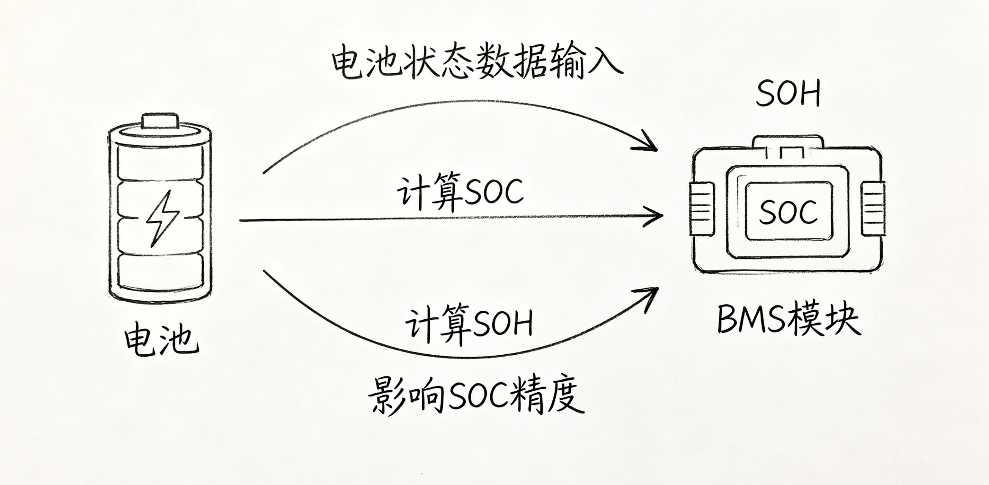
The vast majority of people mistakenly believe this is a battery quality issue, but in fact there is only one underlying cause: they are confusing SOC (State of Charge) with SOH (State of Health).
In the day-to-day management of industrial lithium-ion batteries, explosion-proof batteries for mining, and forklift power batteries, SOC and SOH are the two key indicators of the BMS (Battery Management System).
If you cannot interpret these two figures, you will be unable to carry out precise maintenance; this will only serve to shorten the battery’s lifespan, increase the risk of equipment downtime and drive up replacement costs.
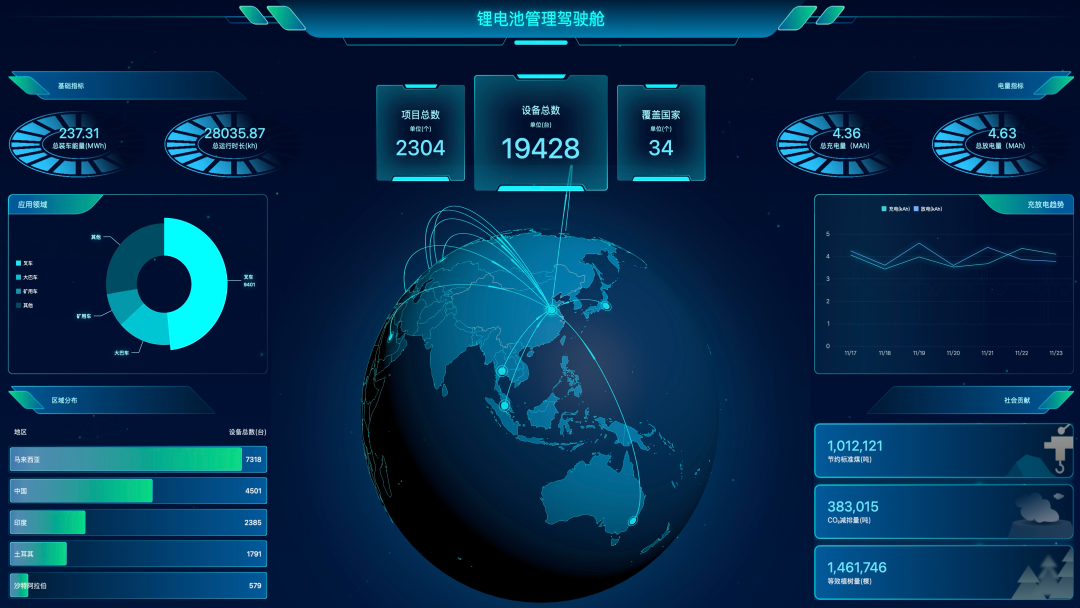
Today, Frey will explain the differences between the two and their practical value in plain language that frontline operations staff can easily understand.
1. SOC: The battery’s ‘remaining charge’, indicating how much power is currently available
SOC stands for State of Charge; it is the metric that people are most familiar with, yet also the one most commonly misunderstood.
Put simply, SOC is the real-time percentage of remaining battery charge, much like the remaining fuel level in a car’s fuel tank; it provides an immediate indication of how much power is currently available. It is a dynamic, real-time figure that drops rapidly whilst the device is in use and rises steadily during charging. In industrial settings, standard BMS systems rely solely on basic algorithms to estimate SOC, which can easily lead to inaccuracies. This is particularly true in industrial and mining environments characterised by low temperatures, frequent high-power start-stops, and the mixed use of new and old batteries, where the phenomenon of ‘false charge’ is highly likely to occur: the display shows a high charge level, yet the actual available charge is extremely low. This is also a major cause of sudden shutdowns in forklifts and mining equipment.
According to industry-standard maintenance guidelines, the optimal operating range for industrial lithium-ion batteries is 20%–90% SOC. Repeatedly charging and discharging the battery to full capacity, or allowing it to become severely discharged, will cause sustained damage to the battery’s core components and accelerate ageing and performance degradation.
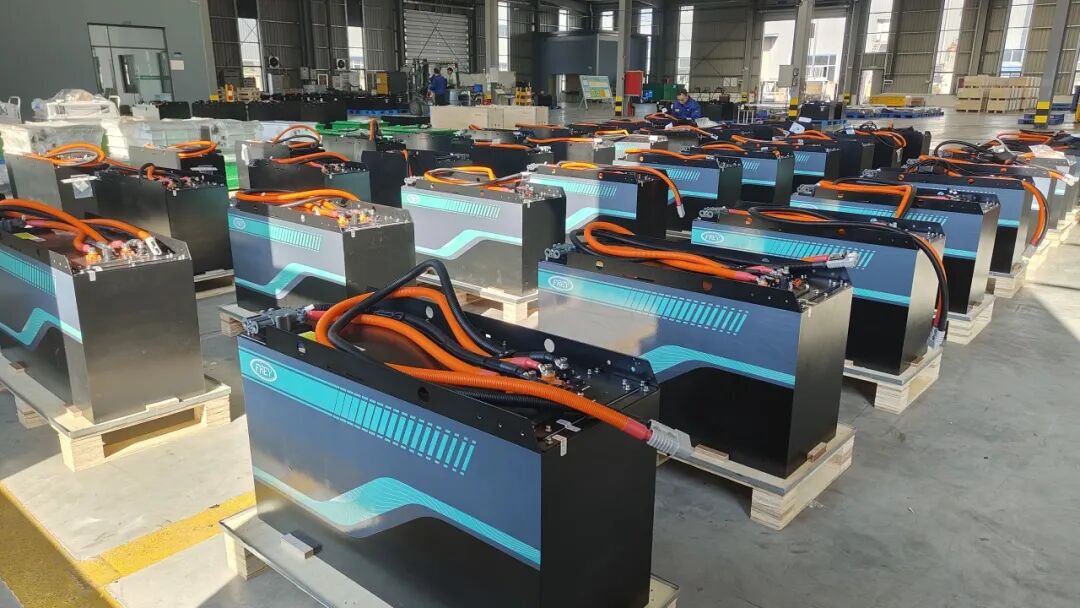
2. SOH: The battery’s ‘health check-up report’—showing how much life it has left
If SOC represents the ‘current charge level’, then SOH (State of Health) represents the battery’s ‘overall health and remaining lifespan’.
Its core calculation is straightforward: the battery’s current maximum usable capacity divided by its rated capacity at the time of manufacture. Unlike SOC, which fluctuates constantly, SOH is a metric that declines slowly and irreversibly; it only decreases with use and cannot be restored through charging. A brand-new battery has an SOH of 100%; however, this figure will continue to decline as a result of charge-discharge cycles, operation at high temperatures, overloading, and ageing during storage. There is a universal gold standard for industrial power batteries: once the SOH falls below 80%, the battery officially enters its end-of-life cycle.
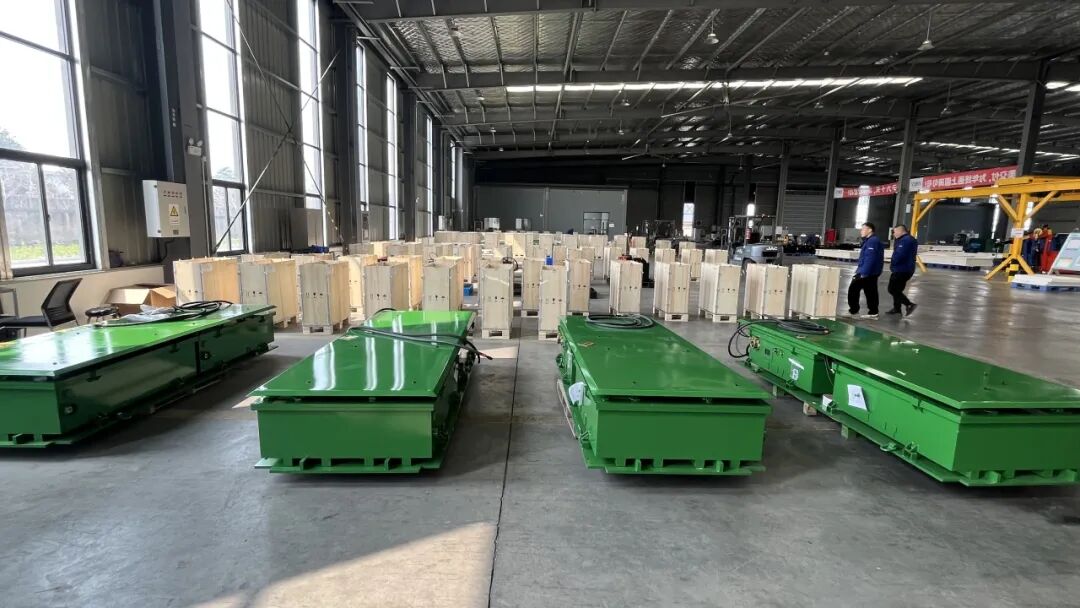
At this stage, the batteries may appear to be fully charged and display a normal State of Charge (SOC), but their actual capacity and internal resistance have already deteriorated significantly. Not only is the operating range drastically reduced, but the batteries are also prone to overheating and abnormal voltage fluctuations, posing a major safety hazard for industrial and mining equipment. In many companies, premature battery failure and frequent malfunctions are essentially caused by a long-term neglect of State of Health (SOH) monitoring.
3. Understanding the key difference: Just because a battery holds a charge doesn’t mean it’s a good battery
This is the core principle that must be borne in mind in all industrial operations and maintenance and equipment procurement: SOC addresses the question of ‘whether it can be used now’, whilst SOH addresses the question of ‘whether it can continue to be used reliably in the long term’. Many standard, low-end BMS systems on the market merely monitor and estimate SOC data, completely overlooking the need for coordinated calibration with SOH. This is the biggest misconception in industrial battery operations and maintenance. When a battery’s SOH continues to deteriorate and its internal resistance increases, the accuracy of SOC estimation becomes completely unreliable, leading to severe issues such as inaccurate readings and power interruptions; no amount of calibration can remedy this.
A brief summary of the key differences between the two:
SOC: dynamically variable, recoverable through charging, reflects the current state of charge, and is used for day-to-day power management;
SOH: irreversible degradation, cannot be restored through charging, reflects battery lifespan, and is used to predict replacement intervals.
4. Precise Control of Both Metrics is Key to Reducing Industrial Battery Costs
In industrial settings such as mining and underground operations, electric forklifts, and commercial and industrial energy storage, where battery costs are high, downtime is costly and safety requirements are stringent, maintenance based solely on State of Charge (SOC) is no longer sufficient. To extend battery lifespan, prevent sudden failures and reduce replacement costs, the key lies in achieving synchronised, precise monitoring and coordinated calibration of both SOC and State of Health (SOH).
Designed to address the complex operating conditions of industrial lithium-ion batteries, Frey’s proprietary BMS (Battery Management System) moves away from traditional single-parameter state-of-charge estimation models. Using high-precision algorithms, it simultaneously collects core data—including battery capacity, internal resistance and temperature—in real time, enabling accurate SOC correction and lossless dynamic SOH calculation. Combined with manual full-charge and full-discharge calibration, the system outputs precise battery status data in real time, effectively resolving issues such as false readings, voltage fluctuations and misjudgements of battery capacity in industrial and mining environments.
When used in conjunction with a cloud-based EMS operations and maintenance system, it enables real-time remote monitoring of equipment battery SOC and SOH data, allowing for the early prediction of battery ageing trends and the early warning of potential faults. This helps businesses to accurately plan battery replacement cycles, avoiding unnecessary battery replacements and unexpected equipment downtime, thereby significantly reducing the total lifecycle O&M costs of industrial batteries.
Related News
Frey Golf Cart Air-Conditioning Lithium Batteries Successfully Shipped Overseas
Recently, a batch of Frey lithium batteries designed specifically for golf cart air-conditioning systems successfully completed comprehensive quality inspections, compliant packaging, and all required shipping procedures. The shipment has now officially departed for over...
Honing Artistic Craftsmanship, Empowering All-Round Development | Frey’s Third Skills Competition Concludes Successfully
On 17 July, Jiangsu Frey Battery Technology Co., Ltd. successfully concluded all events of its third Skills Competition and held a closing ceremony and awards presentation. Held under the theme ‘Refining Artistry, Empowering All-Round G...
Celebrating the 105th Anniversary of the Founding of the Party | Frey Party Branch Organises a ‘1 July’ Themed Party Day Event
To celebrate the 105th anniversary of the founding of the Communist Party of China, further strengthen the cohesion and effectiveness of the Party organisation, and inspire Party members and cadres to uphold their ideals and convictions whilst fulfilling their duties wit...