


Battery System
Contact Us

Golf car power battery PACK design scheme
2023-08-31
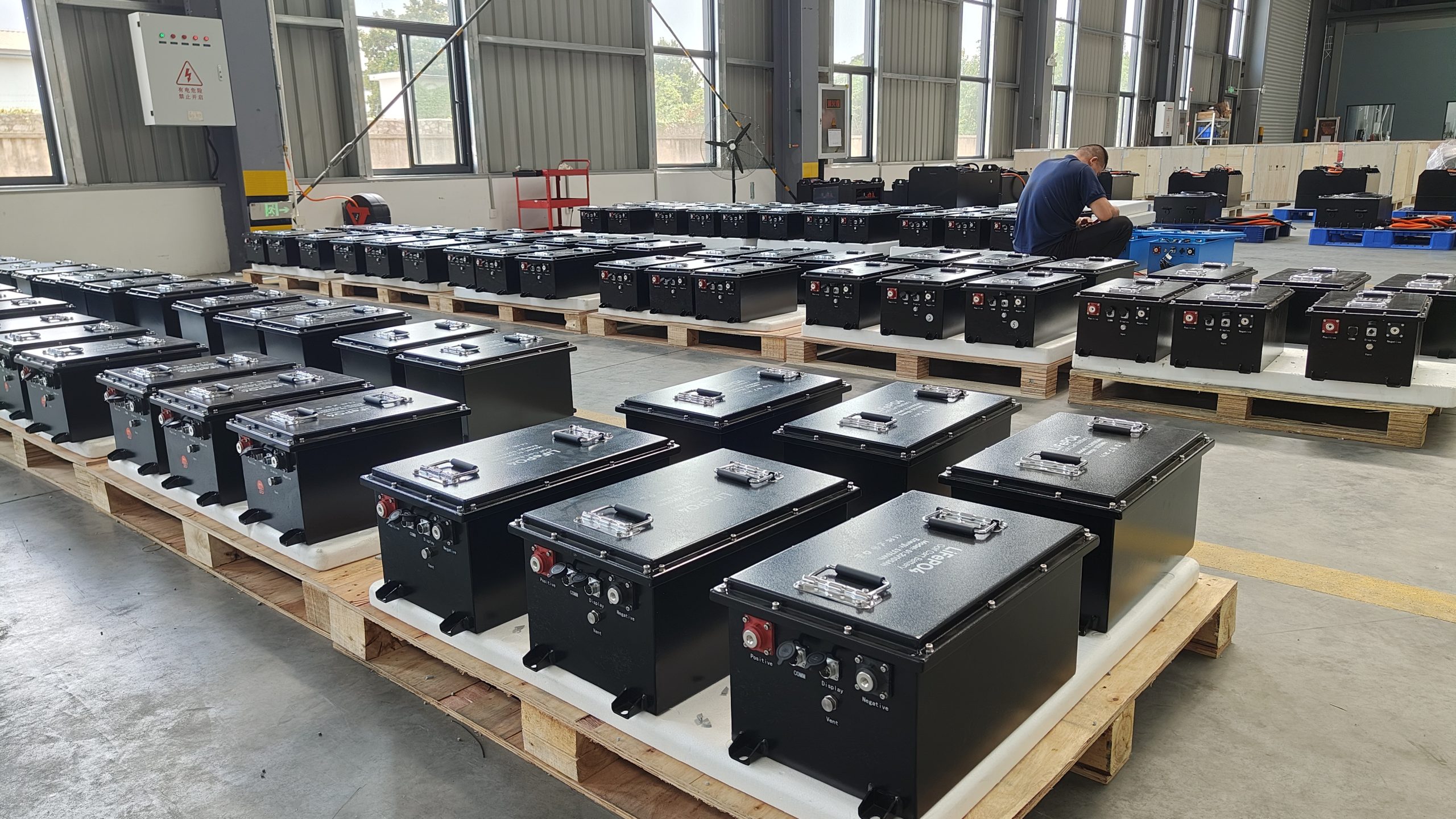
The Golf Car Power Battery PACK design is a comprehensive engineering task designed to improve the vehicle's range, performance and safety. The following is a detailed design of the FREY Lithium battery, covering the key design elements and considerations:
1. Select a battery type
When designing the golf car power battery PACK, you first need to choose the appropriate battery type. Common options include lithium-ion batteries, lithium titanate batteries, etc. Among them, lithium-ion batteries are the most widely used battery type because of their high energy density and long cycle life.
2. Battery capacity and voltage design
Battery capacity: Determine the battery capacity according to the use scenario and battery life requirements of the golf car. In general, high-capacity batteries can provide a longer range.
Voltage design: Design the appropriate battery voltage to meet the power requirements of the golf cart and match the electrical system.
3. Module layout and structure design
Module layout: A properly designed module layout can maximize the use of vehicle space and improve energy density and power density. Module layout should take into account the geometry of the battery pack and the placement and mounting orientation of the battery module to match the available space of the vehicle.
Connection mode: The connection mode between the battery modules should be firm and reliable, while considering the electrical connection and heat dissipation effect.
Protective structure: including shell, protective board, insulating material, etc., to protect the battery from external environment and physical damage. The shell design should meet the requirements of waterproof and dustproof, and usually the seal protection level should reach IP67 or above.
4. Battery management system (BMS) design
BMS plays a crucial role in the golf car power battery PACK, and its design points include:
Battery status monitoring: Monitor battery voltage, temperature, current and other parameters to ensure that the battery is working within a safe range.
Battery balance: Maintain voltage balance between battery modules to extend battery life.
Over-charge and over-discharge protection: Avoid over-charge or over-discharge of the battery to ensure battery safety and performance.
Cooling system: Design an effective cooling system to control the battery temperature within a safe range, improve battery life and performance stability. This can include a combination of liquid-cooled plate cooling and side PTC heating.
Temperature sensor: A temperature sensor installed inside the battery PACK that monitors the battery temperature in real time and regulates the cooling system in collaboration with the BMS.
Short-circuit protection: Design short-circuit protection devices to ensure that the battery system will not have safety problems in the case of short circuit.
Fireproof and explosion-proof design: Using fireproof and explosion-proof materials and technologies to improve the safety of the battery system.
5. Mechanical strength and stiffness design
The structural design of the power battery system needs to have sufficient strength and stiffness to ensure that under typical extreme conditions (such as emergency braking, crossing road obstacles or bumps, sharp turns, etc.), the battery system parts do not occur damage and failure. Specific requirements include:
Under full load condition, the impact acceleration is used to calculate the static strength, and the corresponding deformation should be less than the maximum allowable deformation.
The battery housing must be able to withstand a certain amount of mechanical shock and vibration to ensure that no damage occurs in complex driving environments.
6. Safety warnings and labels
The power battery system should have a permanent identification and safety risk warning label, indicating the chemical system type of the battery unit and the basic parameters of the power battery system for identification and maintenance. At the same time, the high voltage danger symbol should be set on the first visible surface or clear and eye-catching position of the battery pack.
To sum up, the golf car power battery PACK design is a comprehensive engineering task, which needs to consider battery type, capacity, voltage, module layout, BMS design, mechanical strength and stiffness, and safety warnings. Through scientific and reasonable design, a power battery PACK suitable for golf cars can be designed to improve the vehicle's driving range, performance and safety.
Related News
Putting Knowledge into Practice | Frey Conducts a Corporate Knowledge Assessment for Employees
On July 23, Jiangsu Frey Battery Technology Co., Ltd. organized a corporate knowledge assessment for its employees. The assessment served not only as a comprehensive review of employees’ knowledge, but also as a focused training session designed to align thinking, build ...
Regular Study Tours Continue to Gain Momentum as Faculty and Students from CUMT’s School of Materials Science and Physics Visit Frey for Industry–Academia–Research Exchange
This month, China University of Mining and Technology (CUMT) continued its series of practical study programs. Following earlier visits by faculty and students from the Applied Chemistry and Energy Chemical Engineering departments of the School of Chemical Engineering an...
Frey Golf Cart Air-Conditioning Lithium Batteries Successfully Shipped Overseas
Recently, a batch of Frey lithium batteries designed specifically for golf cart air-conditioning systems successfully completed comprehensive quality inspections, compliant packaging, and all required shipping procedures. The shipment has now officially departed for over...